Over-Exfoliation: Signs, Causes & How to Repair Your Skin Barrier
Exfoliation can make the skin feel smoother, brighter, and softer. However, exfoliating too much can damage the skin barrier and cause dryness, redness, burning, sensitivity, and irritation. With chemical exfoliants, exfoliating serums, peeling masks, cleansing brushes, and other skincare products becoming popular, over-exfoliation is an increasingly common skincare mistake.
The key to healthy skin is not removing as many dead skin cells as possible. It is maintaining a healthy balance between exfoliation, hydration, and skin barrier protection.
What Is Over-Exfoliation?
Over-exfoliation happens when you exfoliate your skin too frequently or use multiple exfoliating products that your skin cannot tolerate.
There are two main types of exfoliation:
Chemical exfoliation: Uses ingredients such as AHAs, BHAs, and PHAs to loosen and remove dead skin cells.
Physical exfoliation: Uses scrubs, brushes, cleansing tools, or other methods to physically remove dead skin cells.
Exfoliation itself is not necessarily harmful. The problem occurs when exfoliation becomes too frequent, too harsh, or is combined with other irritating skincare products.
When the skin barrier becomes weakened, the skin may lose moisture more easily and become more sensitive to products and environmental factors.
Why Does Over-Exfoliation Damage the Skin Barrier?
The skin barrier is the outer protective layer of the skin. It helps reduce water loss and protects the skin from environmental irritants.
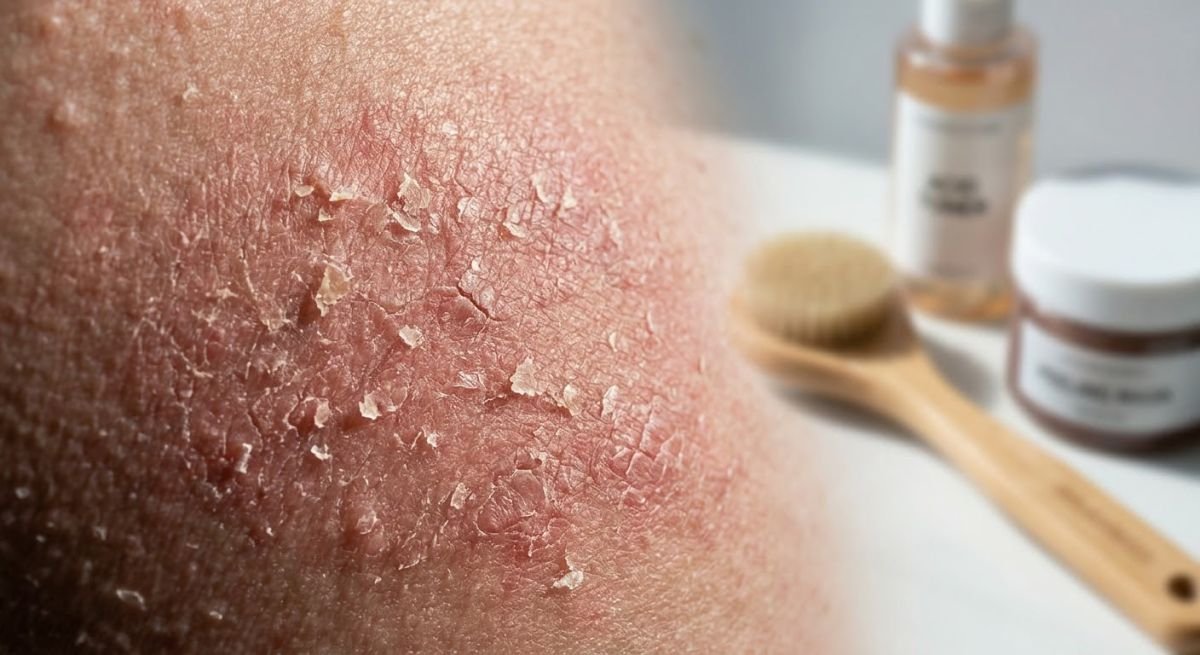
Exfoliating too much can interfere with this protective barrier. As a result, over-exfoliated skin may become:
Dry and rough
Red or irritated
Sensitive to skincare products
Tight or uncomfortable
More likely to sting or burn
Flaky or peeling
More reactive to environmental conditions
This can create a frustrating cycle. A person may think their skin needs more exfoliation because it looks rough or flaky, but adding more exfoliating products can make the irritation worse.
For a broader understanding of maintaining healthy skin, see our Complete Guide to Skin Health: Skincare Routine & Tips.
Common Signs of Over-Exfoliation
Recognizing the signs of over-exfoliation early can help prevent continued irritation.
1. Burning or Stinging
If your normal moisturizer, cleanser, or skincare products suddenly start burning or stinging, your skin may be irritated.
A product that was previously comfortable should not consistently cause significant burning or discomfort.
2. Persistent Redness
Redness can occur after using irritating skincare products. If your face remains unusually red or becomes increasingly reactive, it may be a sign that your skin needs a break from aggressive exfoliation.
3. Tight or Uncomfortable Skin
Skin that feels unusually tight, especially after cleansing or moisturizing, can indicate dryness and barrier disruption.
4. Flaky or Peeling Skin
Flaky skin and peeling after exfoliation can occur when the skin becomes irritated. Adding another exfoliating product to remove the flakes may make the problem worse.
5. Increased Skin Sensitivity
Over-exfoliated skin may become more sensitive to products, weather, heat, cold, and sunlight.
6. Dryness Despite Using Moisturizer
If your skin remains extremely dry or uncomfortable despite applying moisturizer, it may be worth simplifying your skincare routine instead of adding more active ingredients.
Can Over-Exfoliation Cause Breakouts?
It can contribute to irritation and make existing skin problems harder to manage. However, not every breakout is caused by over-exfoliation.
Acne can have multiple contributing factors, including oil production, clogged pores, hormones, genetics, and inflammation.
If you are dealing with recurring acne, it is better to understand the possible causes instead of repeatedly increasing exfoliation.
You can also read our article about the relationship between digestive health and skin: Gut Health and Acne: Understanding the Gut-Skin Connection.
Over-Exfoliation and Sensitive Skin
People with sensitive skin may have a lower tolerance for strong exfoliating products. Using several active ingredients at the same time can increase the possibility of irritation.
For example, a routine containing several exfoliating acids, scrubs, retinoids, or other potentially irritating products may be too aggressive for some people.
This does not mean that everyone must avoid exfoliation. Instead, exfoliation should match your skin type and tolerance.
Chemical Exfoliation vs. Physical Exfoliation
Chemical Exfoliation
Chemical exfoliants include ingredients such as:
AHAs
BHAs
PHAs
Different acids work differently, and product strength and formulation matter. Using several acid products together is not automatically better.
Physical Exfoliation
Physical exfoliation includes:
Face scrubs
Cleansing brushes
Exfoliating gloves
Other abrasive tools
Aggressive scrubbing can increase mechanical irritation, particularly when the skin is already sensitive.
How Often Should You Exfoliate?
There is no single exfoliation schedule that works for everyone.
Some people may tolerate exfoliation several times per week, while people with sensitive or already irritated skin may need to exfoliate much less often or temporarily stop.
Instead of following a fixed number, pay attention to how your skin responds.
If your skin develops persistent redness, burning, peeling, dryness, or sensitivity, continuing to exfoliate is unlikely to be helpful.
How to Repair an Over-Exfoliated Skin Barrier
If you think you have over-exfoliated your skin, simplifying your skincare routine can help reduce further irritation.
Step 1: Stop Exfoliating Temporarily
Take a break from exfoliating acids, facial scrubs, peeling products, and other products that appear to worsen irritation.
Step 2: Use a Gentle Cleanser
Choose a gentle cleanser and avoid aggressive scrubbing.
Step 3: Focus on Moisturizing
A suitable moisturizer can help support the skin's protective barrier and reduce dryness.
Step 4: Protect Your Skin From the Sun
Sun protection is especially important when the skin is irritated or sensitive. Use appropriate sun protection and avoid unnecessary prolonged sun exposure.
Step 5: Avoid Adding More Active Ingredients
When your skin is irritated, adding more acids or strong active ingredients can make your routine unnecessarily complicated.
Give your skin time to settle before gradually reintroducing products.
Over-Exfoliation and Dark Spots
Irritation and inflammation can sometimes contribute to post-inflammatory hyperpigmentation (PIH), particularly in people whose skin tends to develop dark marks after inflammation.
This is important for people who are concerned about dark spots after acne, irritation, or skincare reactions.
If you repeatedly irritate your skin while trying to make it brighter, you may end up dealing with a longer-lasting discoloration problem.
Skincare in Pakistan: Heat, Sun and Exfoliation
People living in Pakistan may deal with strong sunlight, heat, dust, and seasonal changes. These environmental conditions can make a simple and consistent skincare routine particularly useful.
However, climate alone does not mean everyone needs to exfoliate more or less frequently.
If your skin is already irritated, focus on gentle cleansing, moisturization, and sun protection rather than increasing exfoliation.
For more general skincare guidance, read Complete Guide to Skin Health: Skincare Routine & Tips.
Common Exfoliation Mistakes
Many skincare problems come from trying to do too much at once.
Common exfoliation mistakes include:
Exfoliating every day without checking skin tolerance
Using multiple exfoliating acids together
Scrubbing irritated skin
Using a peeling product and a scrub on the same day
Continuing exfoliation despite burning or redness
Forgetting moisturizer
Ignoring sun protection
Copying another person's skincare routine
Assuming stronger products always produce better results
A simple skincare routine that your skin can tolerate is often more practical than using many active products.
Does More Exfoliation Mean Better Skin?
No.
The goal of exfoliation is not to remove as many skin cells as possible. Excessive exfoliation can cause irritation and skin barrier damage.
Healthy skincare is about balance. Exfoliation can be one part of a skincare routine, but cleansing, moisturizing, sun protection, and choosing products appropriate for your skin are also important.
When Should You See a Dermatologist?
Consider consulting a dermatologist if you experience:
Persistent redness
Severe burning or pain
Significant swelling
Repeated skin reactions
Persistent peeling
Ongoing acne or irritation
Dark marks that continue to worsen
Skin problems that do not improve after simplifying your routine
A dermatologist can help determine whether the problem is over-exfoliation, acne, dermatitis, an allergic reaction, or another skin condition.
Simple Tips to Prevent Over-Exfoliation
To reduce the risk of exfoliating too much, remember these simple rules:
Do not assume more exfoliation means better results.
Introduce new skincare products gradually.
Avoid combining multiple irritating products without a reason.
Stop or reduce exfoliation when your skin becomes irritated.
Keep your skincare routine simple when your skin barrier is damaged.
Moisturize regularly.
Use sun protection.
Pay attention to your skin's response instead of blindly following social media routines.
Final Thoughts
Over-exfoliation can damage the skin barrier and leave skin dry, red, sensitive, flaky, and irritated. The solution is not necessarily another skincare product. In many cases, the first step is to reduce irritating products and return to a simple routine focused on gentle cleansing, moisturization, and sun protection.
Exfoliation can be useful when it is appropriate for your skin, but healthy skin does not require constant exfoliation.
The best skincare routine is one that supports your skin barrier rather than repeatedly stressing it.
Medical Disclaimer: This article is for general educational purposes only and is not a substitute for professional medical advice, diagnosis, or treatment. If you have persistent, severe, or worsening skin symptoms, consult a qualified dermatologist.